
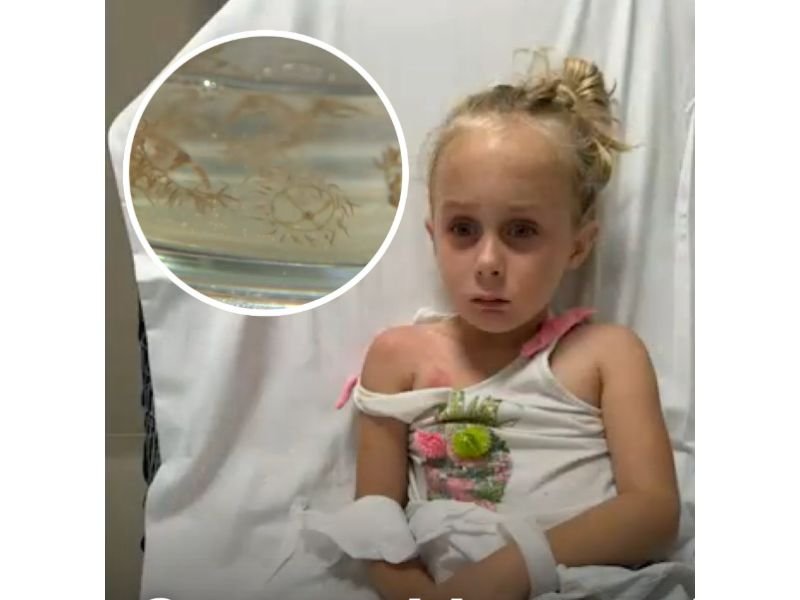
BRICK, NEW JERSEY – A 6-year-old girl is recovering after a painful encounter with a rare and invasive jellyfish species while swimming in the Metedeconk River in Ocean County. Amelia Colvin was in the water on June 7 when a clinging jellyfish became lodged between her life vest and her skin, triggering a sting that left her in agony for days.
According to her mother, Julianne Colvin, Amelia suddenly began screaming and grabbing her chest while still in the water. What followed was four days of escalating pain that left the child unable to eat or sleep, and required three separate trips to the emergency room and doctors’ offices before the symptoms finally subsided.
Pain That Builds Instead of Fading
Experts say Amelia’s symptoms point clearly to a clinging jellyfish sting, a species known for behaving differently than the jellyfish most families are used to encountering at the Jersey Shore. Dr. Paul Bologna, who directs the Marine Biology program at Montclair State University and has studied the species for years, explained that with most jellyfish the pain starts and then fades. With this species, he said, the pain keeps building instead of subsiding.
Clinging jellyfish were first identified in New Jersey waters in 2016. Native to the Pacific coast, they are considered an invasive species in the region and have since been spotted in rivers, bays, and brackish waters from Cape May to Sandy Hook. Bologna’s recent fieldwork suggests their numbers may be climbing quickly this season, after he collected roughly 300 of the small jellyfish in a single hour at one location.
Family Hopes to Help Others Recognize the Danger
The Colvin family says they were not familiar with the species before Amelia’s sting and want other parents and even medical professionals to better understand what to look for. The family continues to swim, crab, fish, and boat on the river, but says they are now more cautious during the season when clinging jellyfish tend to cluster near seaweed and algae.
Stay updated for the latest news as this story develops.
Leave a Reply